Choosing Your Degree: Dark vs. Light vs. Urban Academia
If you’re currently reading this while surrounded by three half-empty coffee cups and a stack of books you promise you’re going to finish this weekend, congratulations: you’re one of us. But as writers and readers, we have to ask ourselves—what kind of "academic" are we, exactly?
Because let’s be honest, the "academia" subculture has branched out faster than a rogue ivy vine on a library wall. We aren't just talking about tweed anymore. We’re talking about a whole multiverse of scholarly vibes.
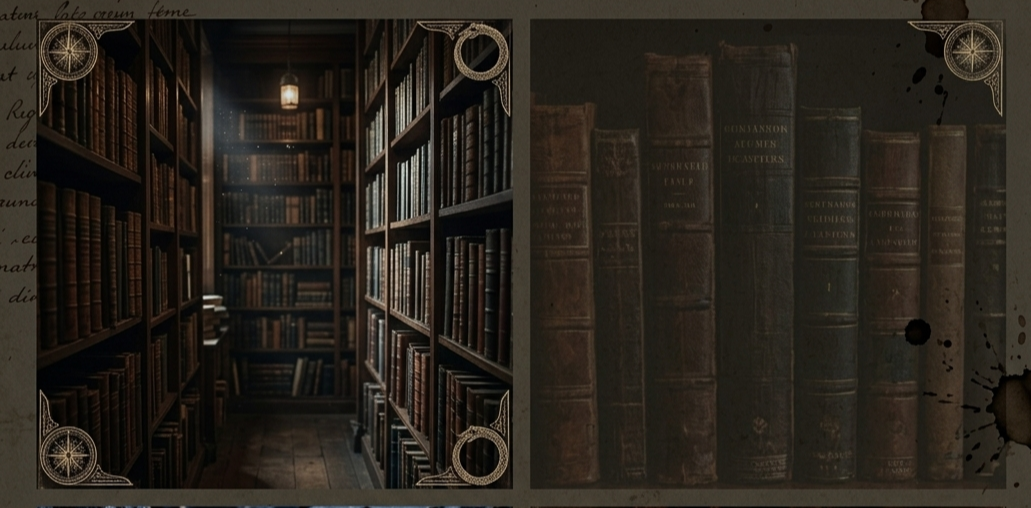
Here is your crash course in the Trinity of Academia, and how to use them to make your characters pop off the page.
The Three Pillars of the Ivory Tower
1. Dark Academia (The “Tragic Scholar”)
The Vibe: Gothic, moody, and slightly dangerous. It’s the smell of old paper and the feeling that a secret society is definitely watching you from the shadows.
The Core: Obsession. Whether it's ancient Greek or a forbidden ritual, characters here don't just study; they consume. Here, you will be judged by your peers.
The Palette: Deep browns, forest greens, charcoal, and black.
2. Light Academia (The “Hopeful Romantic”)
The Vibe: Sun-drenched libraries, classic poetry, and the genuine joy of discovery. If Dark Academia is a midnight ritual, Light Academia is a picnic in a meadow while reading Jane Austen.
The Core: Curiosity and connection. It’s about the warmth of knowledge and the beauty of the world. Optimism and good lighting.
The Palette: Creams, beiges, soft whites, and tan.
3. Urban Academia (The “Modern Intellectual”)
The Vibe: Think "The City is my Campus." It’s tech-forward, fast-paced, and gritty. It’s the student who studies on the subway and codes in a neon-lit cafe.
The Core: Practicality and innovation. It’s about applying knowledge to the real, bustling world now.
The Palette: Navy, cool greys, sharp whites, and occasional pops of industrial color.
Fashion as a Character Cheat Code
Writers love a good “visual shorthand.” You can tell a reader everything they need to know about a character’s mental state just by describing their sleeves. (Sort of.)
The Dark Academic wears a thrifted blazer with slightly frayed cuffs. Why? Because this obsessed scholar spent their money on rare books rather than tailoring. They look like they haven’t slept since the mid-19th century.
The Light Academic is in a crisp linen vest. They are organized, optimistic, and probably have a very aesthetically pleasing planner. They look like they actually remember to drink water. They might be pals with the athletes, or they may be the athletes.
The Urban Academic is wearing a structured tech-wear coat over a hoodie. They have three portable chargers and a pair of noise-cancelling headphones. They look like they have a deadline in twenty minutes, and they will meet it.
Writing Tips: Don’t Be a Fashion Catalogue
I know, I know. You just spent 3 hours on Pinterest looking at “dark academia outfits” (me too), and you want to describe every single button on your protagonist's cardigan (also me). Resist the urge. Try these simplified tips to be more effective and less verbose.
A humble note: I don’t always succeed with these guidelines in my own writing. These are guidelines I strive to abide by.
1. The Narrator Filter
Don't just describe the clothes; describe what your narrator would actually notice.
An Editor might notice a coffee stain on a lapel (a sign of a late-night deadline).
A Thief might notice the expensive weight of a watch chain.
A Romantic might only notice the way the light catches the stray threads of a sweater.
2. Details with Purpose
Only mention a clothing detail if it tells us something about the character's personality or the plot.
Fail: "He wore a brown tweed jacket with three buttons and a silk lining." (Boring. Reads like I’m about to add an item to my online shopping basket.)
Pass: "He’d shoved his hands so deep into his blazer pockets that the seams were starting to scream—a sure sign he was hiding something." (Better! It tells us about his tension.)
3. The “One-Thing” Rule
Pick one specific item to highlight per scene. If you give us the shoes, the socks, the pants, the belt, and the tie, our brains will check out. Give us the one item that defines the character in that moment, and let the reader’s imagination fill in the rest of the outfit.
Your Homework (If You Want It)
When I’m writing, I get obsessive with researching some rather obscure details. Clothing is one of those details. It can be a lot of fun to imagine a character’s wardrobe. Most of the time, I write a scene and then realize the character needs to be wearing something (most of the time, anyway). But, on the rare occasion, when I have a particularly intriguing (or cute) outfit in my files of things-for-this-story, I find a way to make my character wear the thing. (Sometimes, the plot resists. How dare it.)
So, here’s a fun thought experiment for you about clothing details.
Challenge #1: Pick your favourite book character. What’s in their closet? (Bonus: Do they have a closet? Or several? Or do they only have a worn backpack, and thus wear everything they own every day?)
Challenge #2: What’s your academic alignment? Are you more of a “midnight library” or “subway scholar” type? If academia isn’t normally your look, live a little wild and pick one.
