6 Stories That Secretly Built My Book
Many, many stories have left their fingerprints on my brain over the years. I became a voracious reader at an early age, thanks to parents who firmly believed reading mattered (and who probably regretted it when the stacks I made them carry from the library or the bookstore only got heavier).
But to narrow down the chaotic mental archive, this list focuses on the specific media that laid the foundation for my debut romantasy novel, How to Seal a Curse (And Other Ways to Ruin Your Reputation).
Whether you’re hunting for your next read, updating your watchlist, or curious about the strange creative roots behind the characters occupying Cairn-Gait Conservatory, here are 6 stories I fully credit with inspiring my writing.
My List with No Order
1. Charmed (1998-2006)
The Setup: 3 sisters discover they are descendants of a powerful line of witches, destined to fight the forces of evil as "The Charmed Ones"—all while navigating dating, demons, self-discovery, and dazzling late-90s fashion.
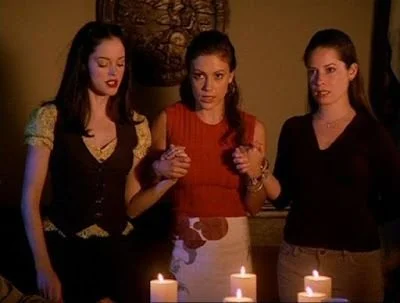
There 2 two distinct versions of Charmed in my head: the reruns I watched as a naive kid, and the reruns I rewatched as an adult when I finally understood all the innuendo that went right over my head the first time.
What always fascinated me about this show was its strict classification system: witches, warlocks, and wizards were entirely different entities. Male magic-users were still witches because “witch” was a species/human classification; warlocks were a type of demon; and wizards were... well, mostly evil-aligned (it’s complicated, so watch the episode). My deep love of magical leading women started here.
It’s a big reason why every magic-user in How to Seal a Curse is a ‘sorcerer’ regardless of gender—while a “witch” is considered something else entirely in my world. Thanks for the terminology inspo, Halliwell sisters.
2. Harry Potter (Series) by J. K. Rowling
The Setup: An ordinary boy living under the stairs discovers on his 11th birthday that he is actually a wizard, whisking him away to Hogwarts to learn magic, solve mysteries, and fight dark forces.
This one is the elephant in the room. When most people hear “magical school,” their minds instantly sprint to Hogwarts. While it’s far from the only magical academy out there, I used this world as a major jumping-off point for a simple question: What if the Chosen One wasn’t the main character, but their hyper-perfectionist classmate instead?
Whatever your thoughts on the series or author today, this iconic setting was a huge catalyst for how I built my own academy layout and student dynamics.
3. The Summoning by Kelly Armstrong
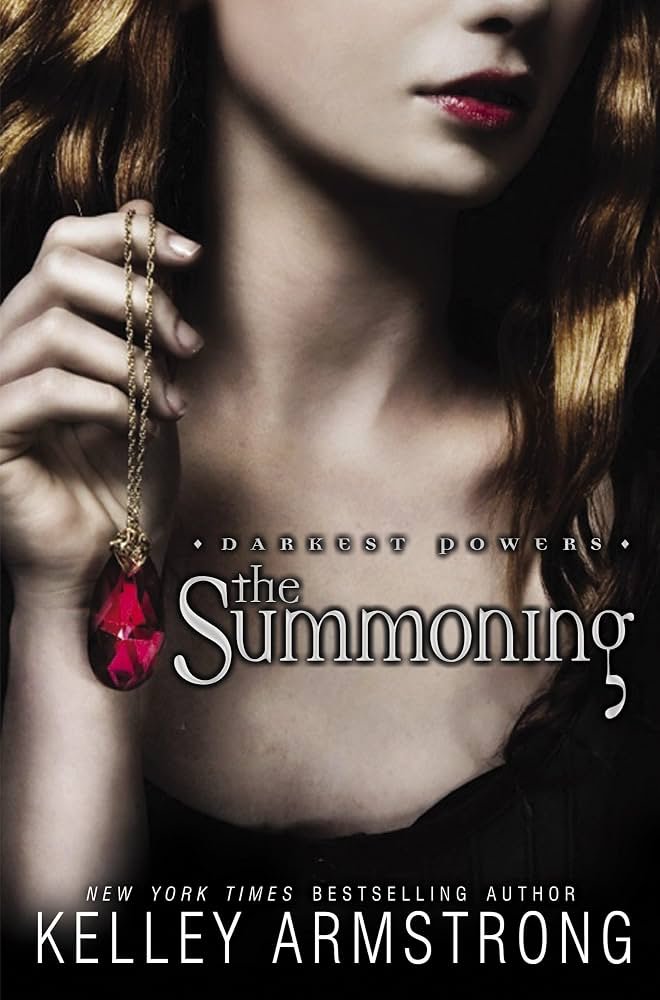
The Setup: After seeing her first ghost, Chloe Saunders’ brand of ‘crazy’ gets her locked up in Lyle House, a group home for ‘troubled’ teens. She quickly realizes her fellow residents aren't just troubled—they’re holding dangerous, supernatural secrets (like sorcery and lycanthropy).
This is a book where teenagers actually act like teenagers. Not tiny adults, not precocious children, but genuine, messy teens.
As a writer, Kelley Armstrong's work is a constant reminder to craft characters who make real, age-appropriate mistakes. My characters at Cairn-Gait make selfish choices, act on impulse, and mess up—frequently. That’s what schools are for, right? They have to learn from their blunders and face the consequences. Armstrong is very skillful in crafting characters who are far too powerful for their own good, with their best and worst impulses getting them into—and out of—serious trouble.
4. Witch Week by Diana Wynne Jones
The Setup: Witches can be good or bad, but the law says all burn at the stake. So when an anonymous note warns, “Someone in this class is a witch,” the students in 6B get nervous—and only too eager to prove it’s someone else.
This is surprisingly the only Diana Wynne Jones book I’ve read (my apologies to Howl's Moving Castle—you’re on my TBR!) and the only one of this series available in my childhood library at the time. (Thankfully, it’s easily read as a stand-alone).
What stuck with me for years was the brilliant tension of kids being simultaneously terrified of and fascinated by magic. Jones captures that conflicting feeling: being special is dangerous, but being special is also a great reason I don't fit in. While I wasn't actively thinking of it while drafting, it absolutely laid the groundwork for how my characters view the danger—and the thrill—of their own power.
5. Red Queen by Victoria Aveyard
The Setup: In a world divided by blood—common Reds and god-like, superpowered Silvers—17-year-old Mare Barrow discovers she possesses a deadly power of her own, forcing her into a dangerous game of deceit.
I’ve mentioned this series before as a massive point of inspiration for one specific reason: a main character I didn't like. (I loved the books, just not the MC.)
Mare Barrow is deliberately written as someone who doesn’t want to be a hero. She doesn't pretend to be altruistic; she plays the game to survive, and when push comes to shove, she chooses herself and her loved ones over the “greater good.” Even when it annoyed me. While moviegoers might jump straight to Katniss Everdeen (The Hunger Games), Mare was my first real encounter with this flavour of reluctant protagonist. I had an absolute blast playing with that exact morally gray, self-preserving energy in my main character, Gwen.
6. Buffy the Vampire Slayer (1997-2003)
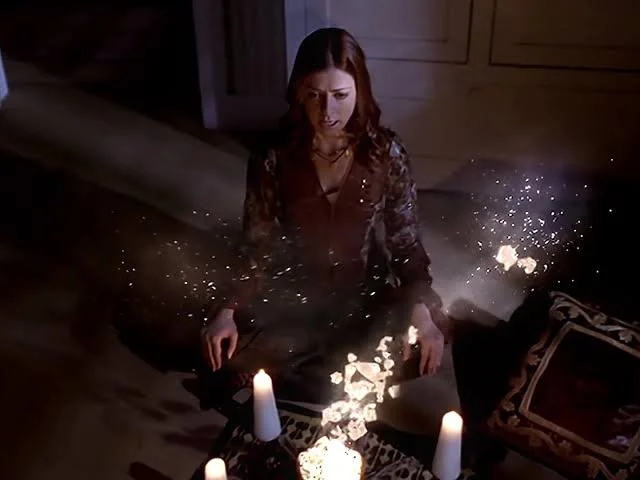
The Setup: In every generation there is a chosen one. She alone will stand against the vampires, the demons, and the forces of darkness. She is the Slayer. Armed with a stake, a Watcher, and a loyal group of friends (Scoobies), Buffy keeps the apocalypse at bay one episode at a time.
Magic in the Buffyverse is very much a soft magic system—it bends to whatever the plot needs, though it constantly hints at physical limits, conduits, and heavy emotional tolls. Willow’s journey with magic is a long, messy arc about power, intimacy, and consequence.
My biggest takeaway for my own writing? A character can possess universe-altering power and still feel powerless. And sometimes, magic isn’t the key to solving the problem at all—bashing through the chaos with your besties is.
End of List, Now It’s Your Turn
That’s my short list! Not exhaustive by any means, but these 6 stories have taken up permanent residence in my mind, quietly shaping the way I build worlds, power structures, and flawed characters.
Have you read or watched any of these classics? Is there a book or show that lives rent-free in your brain and influences how you create? Let's chat in the comments!