If you’ve spent any time poking around fantasy world-building, folklore forums, or comic book racks, you’ve probably run into the word hobgoblin. It rolls off the tongue with a mischievous little bounce. But what, exactly, is a hobgoblin? Is it a goblin wearing a snazzier hat? Is it a superhero villain throwing pumpkin bombs? Or is it a grumpy household spirit that’s about to trash your kitchen because you forgot to leave out a bowl of cream?
As it turns out, it’s a bit of all 3—and the story behind them is delightfully messy. Let’s talk history, pop culture evolution, and why we really need to put some respect back on the hobgoblin name.
1. Folklore: The Original House-Guest with Attitude
Long before comic books and video game developers got their hands on them, hobgoblins originated in English and Scottish folklore as a specific brand of domestic spirit.
In early folklore, "hobs" were cousin-adjacent to brownies. They were small, mischievous, human-like creatures who hung around your farm or homestead. If you treated them well—or at least didn't actively insult them—a hobgoblin might secretly help out with chores overnight, sweeping the floors or threshing corn while you slept.
The catch? They were wildly unpredictable. Cross a hobgoblin, forget their cream, or look at them funny, and that helpful little roommate transforms into a full-blown nuisance who will sour your milk, knock over your furniture, and turn your quiet cottage into a poltergeist convention. They weren’t bloodthirsty monsters per se, but they did possess a chaotic streak a mile wide.
2. Pop Culture: Mischief Makers & Pumpkin Bombs
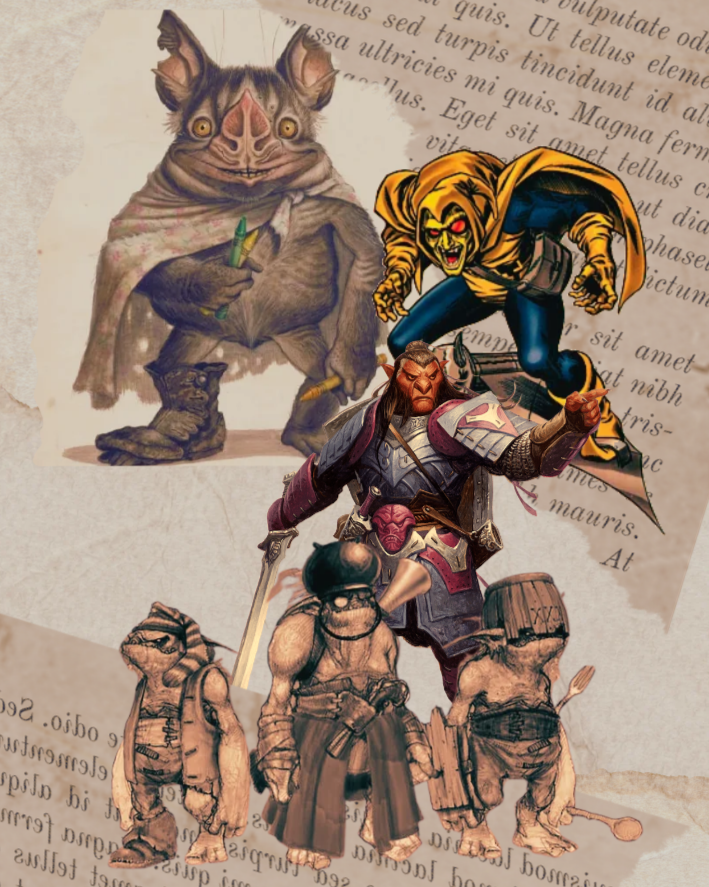
Fast forward a few centuries, and pop culture has taken the "hob" prefix and run absolute marathons with it. Today, when people hear hobgoblin, their minds might bounce to one of these 3 iconic adaptations:
Marvel’s Hobgoblin: Forget domestic chores—this guy is trading cream for glider tech and pumpkin bombs. Emerging as one of Spider-Man’s most cunning foes (shoutout to the OG, Roderick Kingsley), the comic book Hobgoblin took the aesthetic of the Green Goblin and gave it a sharper, corporate-backed, calculated upgrade.
The Hobbes of Fable: If you spent any time playing Lionhead’s iconic RPG series, you know the hobbes. They are those screeching, wild little gremlins that swarm you in caves across Albion. They wear crude rags, hurl fireballs, and sound like absolute lunatics. And they used to be normal kids who got kidnapped. Creepy? Yes. Accurate to folklore? Not really. Delightfully chaotic to battle? Absolutely.
Hogsqueal from The Spiderwick Chronicles: Ah, Hogsqueal. A literary example of a creature both helpful and troublesome. He’s foul-mouthed, utterly obsessed with eating birds (and collecting shiny objects), and fiercely loyal in his own abrasive, distractible way. Peak faery-folk energy. We don't talk about the fascinating lore interpretations in The Spiderwick Chronicles enough.
3. A Rant About Lost Nuance (Or: Stop Lumping All Little Green Guys Together)
Here’s where I step onto my soapbox, adjust my glasses, and deliver a brief, impassioned rant about modern fantasy categorization.
Modern media has a terrible habit of flattening rich, complex folklore into generic buckets. People lump hobgoblins in with brownies, pixies, and goblins like they’re all interchangeable items on a fast-food value menu. It’s the exact same phenomenon as elves—where contemporary media reduces them to either Tolkien’s tall, stoic, archer aristocrats or Santa’s little shoemaker helpers, completely ignoring centuries of regional mythology.
Calling a hobgoblin a "goblin" is like calling a hawk a "bird." Is it technically true? Yup. But so is pigeon, and a peacock, and you would never mistake a royal blue peacock strutting across your lawn for a feral pigeon. The cultures who birthed these tales had distinct words for these entities because they were distinct entities with different rules, temperaments, and origins.
Nuance matters! And honestly, that’s why I love digging into folklore so much. It’s not just about stealing cool monster names for a fantasy novel—though trust me, it is great for that—it’s about discovering how human beings across generations tried to explain the weird, chaotic, inexplicable corners of our world.
What’s your favourite take on the hobgoblin—mythological nuisance, video game gremlin, or comic book supervillain? Let’s chat in the comments!
