Faery or Fairy? A Guide to Spelling the Fair Folk
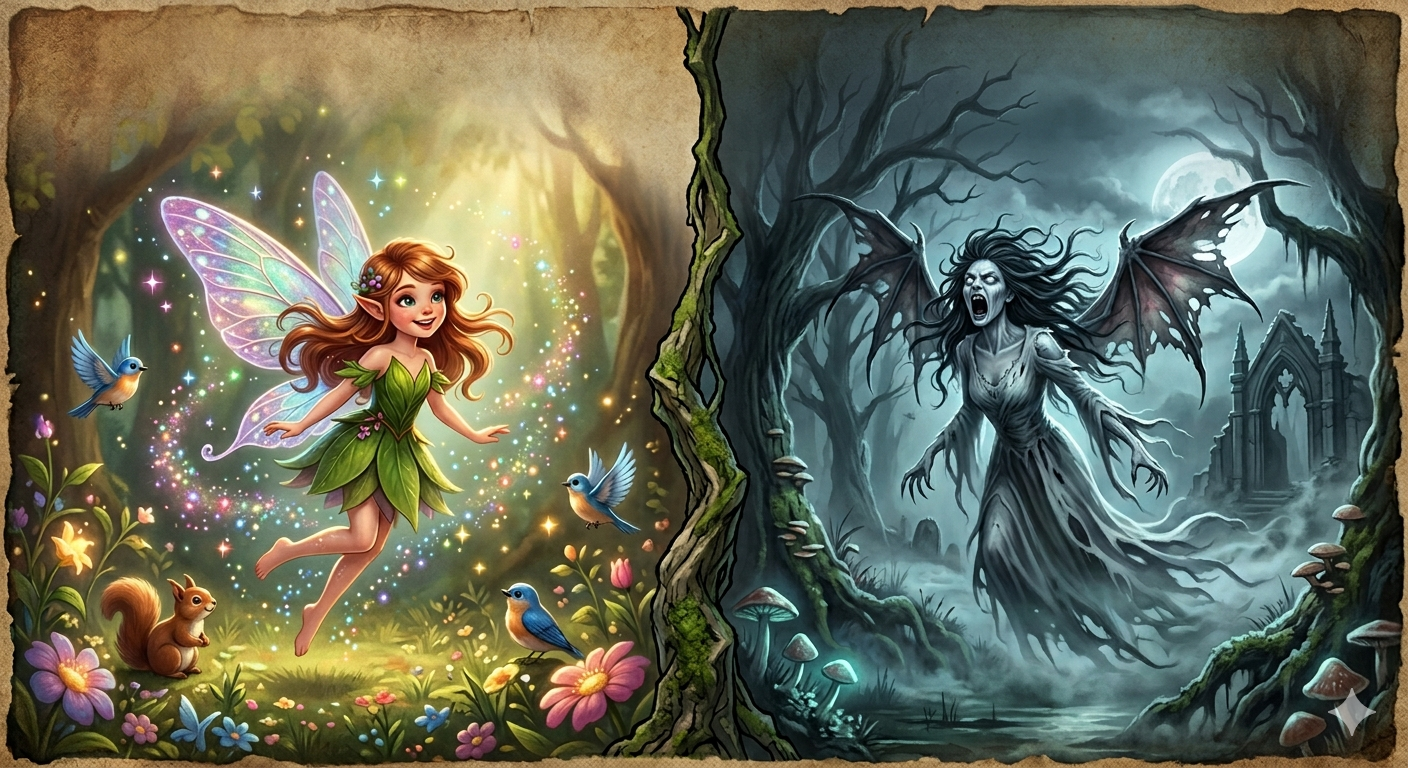
To “Y” or not to “Y!”
There are so many spellings available to name those tricky Good Neighbours.
If you spend as much time as I do staring at a blinking cursor while trying to decide exactly how many vowels a supernatural being needs, welcome to the club.
Many writers have been there—hovering over the keyboard, wondering if a simple “i” or a fancy “ae” combo will better signal to readers that a protagonist is about to get whimsically enchanted or wretchedly eaten.
In the world of fantasy and folklore, spelling is more than just a grammatical choice; it’s a high-speed world-building tool. While there is technically no “wrong” way to spell it, the letters writers choose act as a secret handshake with your audience.
Here’s the breakdown of why the spelling writers choose matters when worldbuilding.
Fairy: The “Safe” Option (Or Is It?)
In modern pop culture, "fairy" has unfortunately been Disney-fied into oblivion. When people see this spelling, they often think of Tinker Bell—glittery wings, pint-sized, limited agency—or enchanting godmothers who help you find a dress for the ball.
But why did these powerful, terrifying entities get relegated to the nursery? We can mostly blame the Victorians. They had a knack for “sanitizing” folklore, turning the bone-chilling Good Neighbors of Scottish and Irish lore into tiny, simple-minded do-gooders who lived in flower pots. If you use “fairy,” you’re either writing for children or sneakily setting your readers up for a moment of creepy terror when a tooth fairy collects more than just a child’s pearly whites.
Faery: The “Enter at Your Own Risk” Option
This is my personal go-to. Adding that “e” and “y” instantly tells the reader: We aren't in Kansas anymore, and that flower definitely wants to bite you.
“Faery” (or “faerie”) signals a return to the roots. It feels older, more grounded in the Unseelie and Seelie courts, and suggests a world where the inhabitants are tricky, curious, and potentially malevolent. It’s the shorthand for “this story contains ancient contracts and high stakes.”
And those stakes might be deadly, romantic, or both.
Fae: The “Romantasy” Option
Let’s be real: if you see the word "fae" on a book jacket today, there is a 95% chance there’s a brooding warrior with impeccable abs waiting on page 22.
In the modern “romantasy” (romantic fantasy, in case you skipped BookTok) and dark fantasy landscape, “fae” has become the gold standard for sexy, powerful, and dangerous. It’s punchy, it’s elegant, and it moves the creature away from “little winged bug” and toward “ethereal humanoid who will probably ruin your life (in a fun way).”
Fey: The Other, Other Option
Less popular, but still an option. And it can land anywhere between life-threatening-hijinks and totally-my-type.
Technically, “fey” is often used as an adjective (meaning doomed, or possessing an otherworldly air), but it’s frequently used as a noun too. Using “fey” can give your world a misty, ethereal quality.
The Verdict: What Word Wins?
The lore didn't start with glitter and tutus. Whether you’re looking at the Sídhe of Ireland or the Sìth of the Scottish Highlands, these beings were always respected—and feared—for a reason.
Fantasy, supernatural, and romantasy writers are, in a way, “re-taking” these names. We’re stripping away the Victorian sterilization and reminding readers that these beings are ancient, fickle, and definitely not the best option for your godmother.
There is no winner. No “right” way. Because when it comes to stories, it’s all context and creativity. So, spell it however you like! Just know that every “e” and “i” a writer drops is a breadcrumb leading readers deeper into the woods. Just remember, readers: if it’s not spelling “ai,” don’t eat the fruit, or you might be cancelling your return ticket.
