Can Faeries Lie?
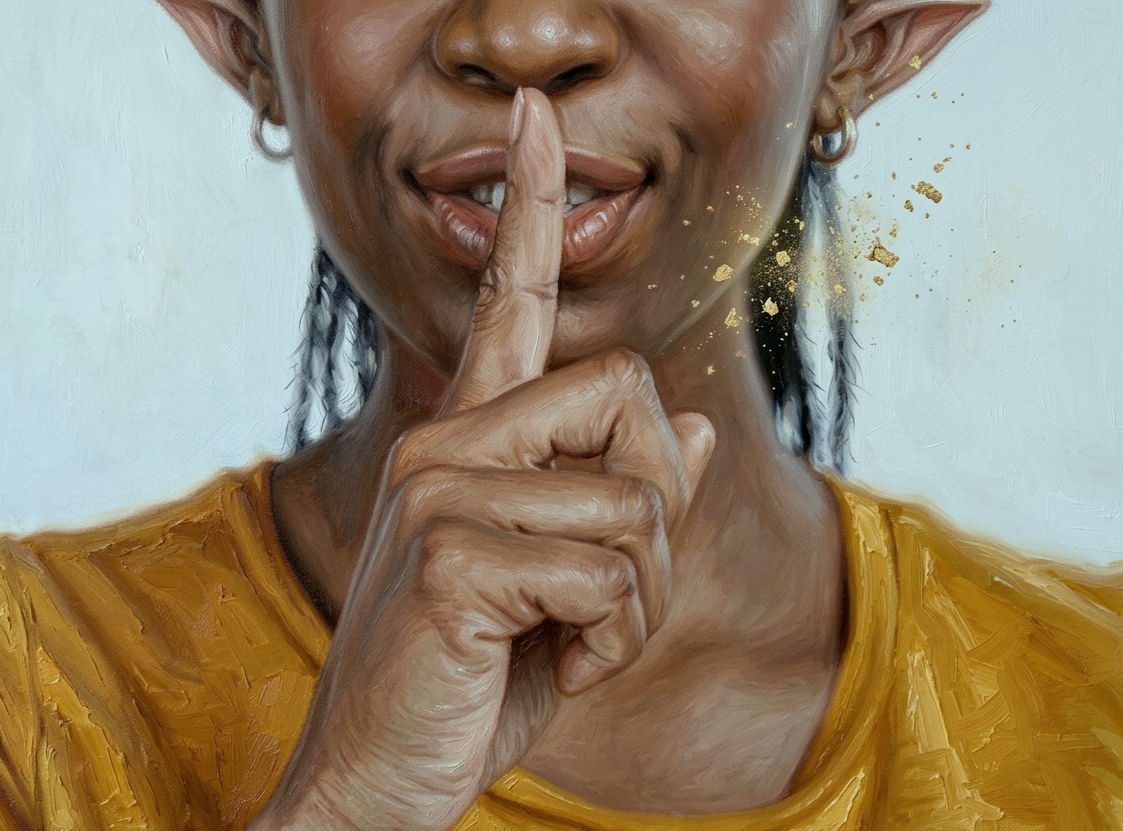
If you’ve picked up a fantasy novel in the last decade, you’ve likely encountered this phrase: “Faeries cannot lie.” This Law of Absolute Truth has become a staple of the genre: a fae prince offers a deal, and the tension comes from the fact that he cannot lie, but he’s about to turn your words into a linguistic pretzel that leaves you in danger or in his debt.
But here is the million-dollar question for us folklore nerds: Is this actually “canon?”
The short answer: No. In traditional lore, the Good Neighbours can absolutely lie. They can look you in the eye and tell you the sky is neon pink. So, why are we all so obsessed with the idea that they’re biologically incapable of a fib?
Grab a cup of tea (don't add sugar unless you want company), and let’s dive into the evolution of the “Honest Elf.”
The Folklore Reality: Truth as a Weapon
Traditional stories from Ireland and Scotland don't usually depict the Neighbours as being “bound” by a naturally occurring spell of honesty. Instead, they are often depicted as obsessively literal.
They don't tell the truth because they are “good”—they do it because they are clever. They love the game of it. Traditional folklore features beings who are deeply attuned to human integrity. They are the ultimate cosmic auditors; they hold humans accountable for their promises and their gratitude.
If you tell a brownie you’ll leave out a bowl of cream and you skip a night, the fallout isn’t a “polite reminder”—it’s your house being turned upside down. If you tell someone you have “no change to spare,” eavesdropping faeries will make sure that was the truth by taking every last coin you have stashed away.
This human-centric focus on truthfulness eventually evolved. Modern writers (myself included!) took a natural leap: if these beings are so obsessed with the weight of a person's word, wouldn't it be much more interesting—and much more inhuman—if they were physically incapable of breaking their own?
The “Creative Truth” Loophole
This is where the fun starts for us writers. The “cannot lie” trope isn't a handicap; it’s a superpower. It forces the character (and the author) to become a master of the Mischievous Answer.
Human: "Will you let me go?"
Fae: "Your feet shall be free to wander this forest for as long as you live." (Translation: Get used to living in this forest, because that’s as far as you’ll get—forever.)
It turns every conversation into a chess match. We love it because it highlights how different their minds are from ours.
How to Handle the “Truth” in Your Writing
So, writers, you’re drafting your novel, and you have to answer the big question: Do your Neighbours lie? Here’s how I usually break it down, because as fiction writers, we get to build the rules from the ground up:
The Power Hierarchy Scale: In some of my worlds, I make it a status thing. The ancient, terrifyingly powerful Faery Lords are the ones bound by truth. Why? Because they are so woven into the fabric of magic that their words create reality. They don't lie because the universe doesn't allow them to be wrong.
The Animalistic Approach: Alternatively, you can make the simple, more "primal" faeries the honest ones. They are too instinctual to understand the concept of a social lie. Meanwhile, the humanoid, “civilized” fae are the ones who have learned the very human art of the Bold-Faced Lie.
The Contractual Obligation: Maybe they can lie, but doing so costs them something—such as their magic or their “glamour” for a period of time. It makes a lie a high-stakes tactical move rather than a daily habit.
Can Your Fae Pinocchio Their Way Through Life?
The joy of being a fiction writer is that you aren't a historian (unless you want to be, in which case, my condolences to your sleep schedule). You get to choose!
Whether your fae are compulsive liars or magically-bound truth-tellers, the key is consistency. If they can’t lie, the fun is in making sure that “truth” is more dangerous than any fabrication could ever be.
