So, You Think You Know the Neighbors? Irish vs. Scottish Faeries
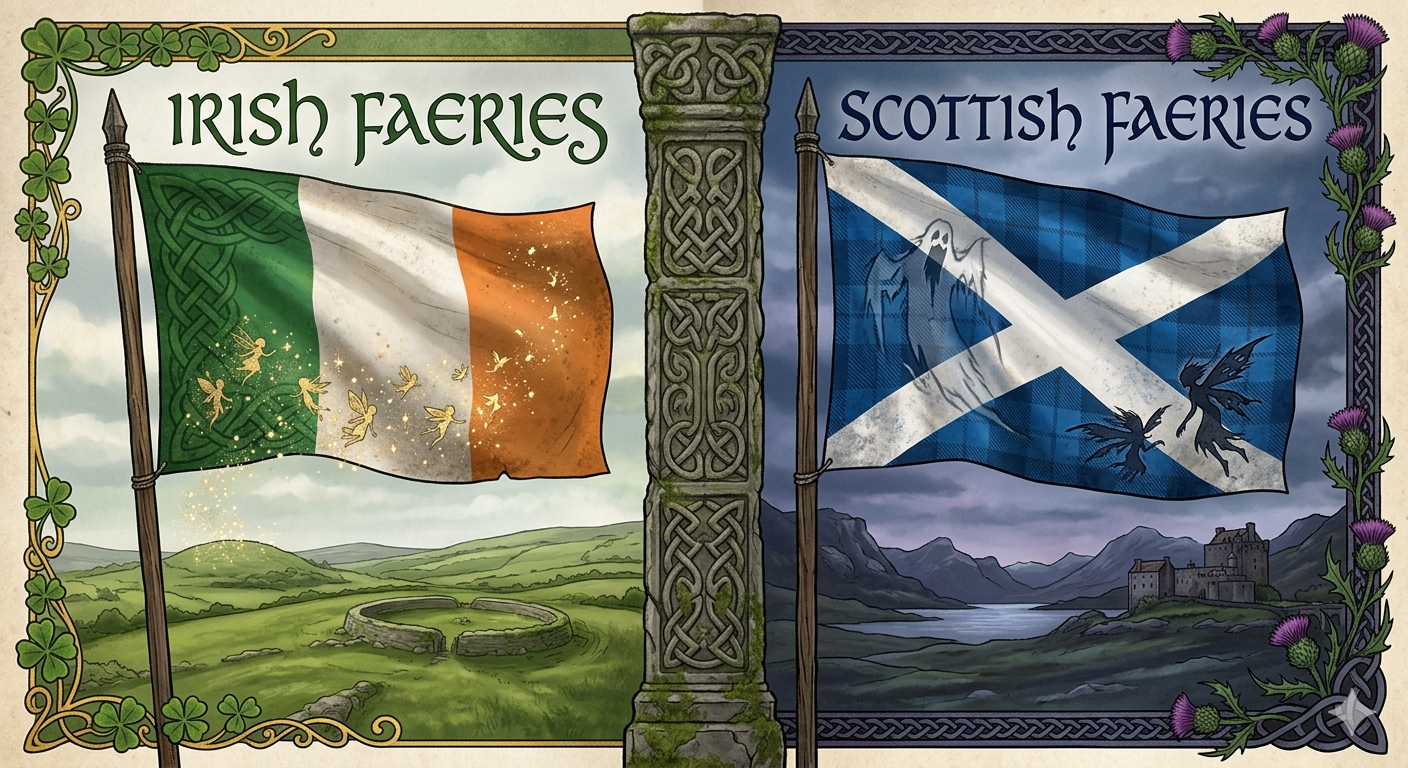
Look, I love all the Good Neighbors. I truly do. I spend an embarrassing amount of time digging through folklore just to figure out the etiquette for offering milk to a spirit that might otherwise dismantle plumbing.
But here’s the thing, fellow writers (and beloved readers): treating faery lore as one generic “Celtic fae” monolith is a rookie mistake. It’s like confusing a Brooklyn hipster with a Texas rancher just because they both wear boots. If you’re writing a story featuring the Fair Folk (or just curious about the source of your favourite stories), it’s immensely helpful to know whose territory you are encroaching upon.
The rules matter. The manners matter. And the likelihood of you being eaten really matters.
There’s no wrong way to enjoy the lore, but from one obsessive researcher to another, here is the quick-and-dirty guide to differentiating the Irish from the Scottish Neighbours.
The Irish Neighbours (the Aos Sí)
The Vibe: Royal, tragic, sophisticated, and absolutely obsessed with land.
In Ireland, we aren't dealing with simple household spirits; we are dealing with gods who got evicted. The Aos Sí (or Daoine Sidhe) are the descendants of the Tuatha Dé Danann, a magical royal race that lost a war to humans and agreed to live underground.
They didn't cope well with the downgrade.
Personality: They are aristocratic. They are proud, stunningly beautiful (usually), and extremely sensitive to insults about their former glory. Think of them as the oldest, snobbiest old-money family in the county. They are generally not maliciously evil by default, but they are capricious. If you respect them, they might bless your crops. If you disrespect them, they will give your entire family a generational curse that might involve strange rashes or permanent bad luck.
Location: They live in Sídhe mounds (ancient burial sites or "fairy forts"). Irish farmers will still re-route motorways rather than bulldoze a fairy fort, not because they are superstitious, but because they enjoy not being haunted.
Writer Tips: Write them as royalty. Their magic is formal. They love music, dancing, and grand processions (the Fairy Host). The horror in Irish faery stories is often psychological or based on “the theft”—they take children or beautiful adults to replenish their fading bloodlines.
Key Figures: The Banshee (Bean Sídhe—tragic ancestral spirit), the Leprechaun (solitary craftsman), and the Púca (shapeshifting trickster).
The Scottish Neighbours (the Daoine Sìth)
The Vibe: Pragmatic, rough, localized, and frequently terrifying.
Scottish lore has a lot in common with the foundations of Irish lore. But they added centuries of harsh weather, clan warfare, and a deep distrust of the landscape. They might have similar names (Sìth is pronounced roughly the same as shee—not a dark side Force user), but their social structures are different.
Personality: They are much more interested in bureaucratic organization. Scotland popularized the classification of the Seelie Court (blessed, slightly nicer, might help you if you ask politely) and the Unseelie Court (unblessed, actively malicious, will eat you just because it’s Tuesday). Do not mistake "Seelie" for "good." Seelie Fae are still terrifyingly powerful; they just have better manners.
Location: They are localized. You don't have a grand host; you have the spirit of that specific loch, or the brownie living in that specific attic. Scottish magic is wilder and deeply tied to the specific geology of the Highlands or the Islands.
Writer Tips: In Scotland, the Neighbours are often physical threats. They don't just lure you away with enchanting music; they drag you into the water and drown you (looking at you, kelpie). Their magic is about transformation—shapeshifting is often a huge deal here. It’s a landscape where the terrain itself might try to kill you.
Key Figures: The Brownie (useful household spirit, until you insult it), the Kelpie (murder horse), the Baobhan Sith (vampiric hag), and the Selkies (seal folk).
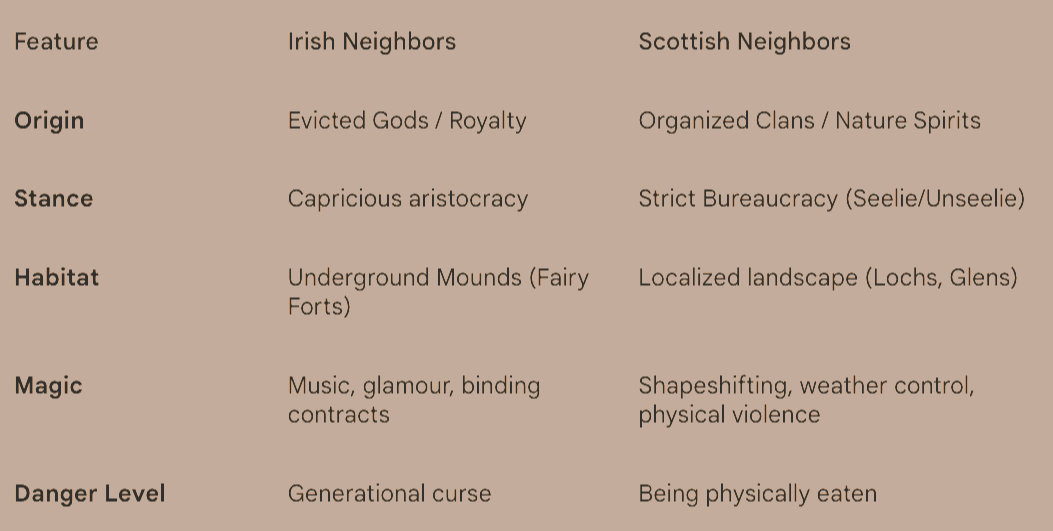
A quick guide to how to tell Irish and Scottish faeries apart in tales.
That’s All Fair Folks (for Now)
This isn’t an exhaustive explanation. There really is so much more to both Irish and Scottish lore. A key takeaway is that manners, wits, and respect are essential when dealing with any variety of the Fair Folk.
If you’re a writer, be mindful of which lore you’re borrowing from, as there are notable distinctions. If you’re a reader, you can treat your favourite stories as an Easter Egg hunt to find which lore they borrowed from. Most writers will blend Irish and Scottish lore, or even draw on other mythologies to make the background unique. Still, it can be fun to find which source your current read was born from. Enjoy exploring!
